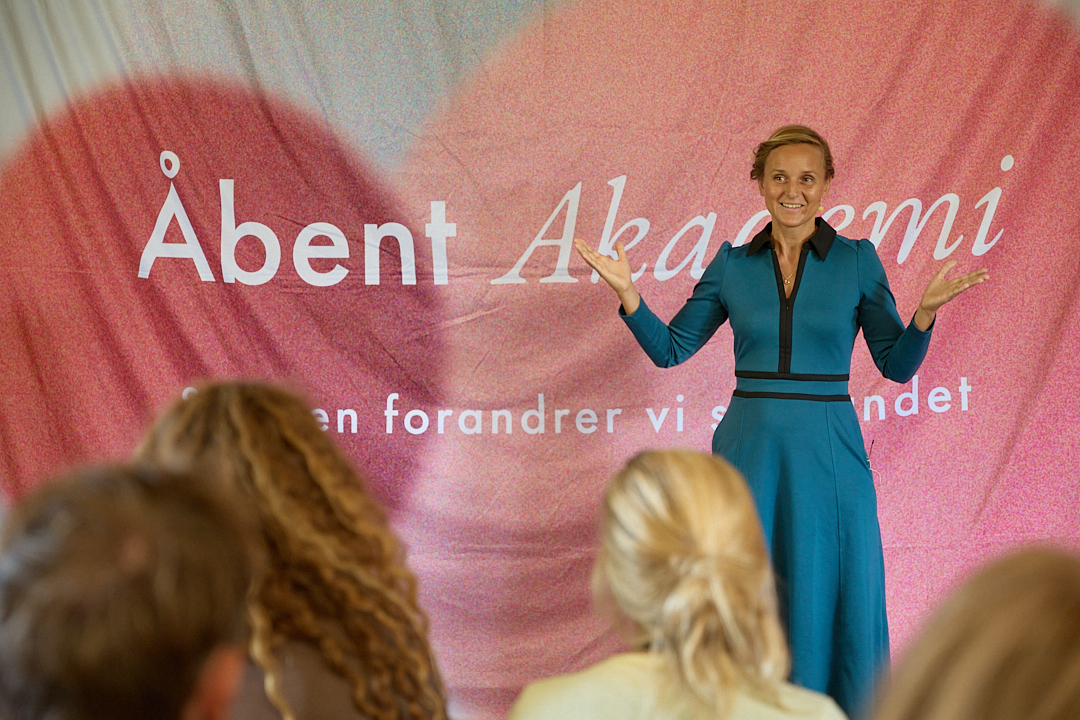
Peace is not synonymous with the absence of conflict, says peace researcher and keynote speaker at Open Academy 2026, Isabel Bramsen. Rather, we humans need to get better at navigating a healthy space for conflict—one where there is room both for intense disagreement and for gaining a deeper understanding of the other side’s perspectives.
“Democracy is a proper way to disagree,”said the Danish theologian and philosopher K.E. Løgstrup. According to renowned peace researcher Isabel Bramsen, we humans would do well to practice both decency and disagreement. “It creates energy and connections, even when we disagree and yell at each other. My biggest concern is that we’re becoming afraid of conflict.”
This may sound like a paradoxical statement coming from a peace researcher who has written a book titled *The Logic of Peace* and has many years of experience as a researcher and conflict mediator in high-tension international crises, including in Syria and the Middle East. But Isabel Bramsen argues that peace, just like war, is an active state that requires us to engage in acts of peace—such as demonstrations—and to maintain a broad dialogue, especially with those with whom we disagree. “We won’t get anywhere if we always try to agree. We need to broaden our horizons so that we’re able to say some tough things, even while respecting one another—whether at home, at work, or in peace negotiations. There must be room for intense disagreement—not hostile, but not passive either.”
Active Diplomacy
In 2026/27, the Academy is focusing on the annual themeof “Connections,” and one of the things we’re practicing is connecting with those with whom we disagree. Isabel Bramsen was the keynote speaker at this year’s Open Academy, where she pointed out that peace is precisely about creating and maintaining connections over time.
“We need to change our perspective on peace negotiations and diplomacy. It’s not just about walking into a room so you can raise the white flag afterward. It’s not just about reaching a peace agreement, but about coming together and trying to challenge one another.”
So what does it take for us to connect—even with people with whom we vehemently disagree?
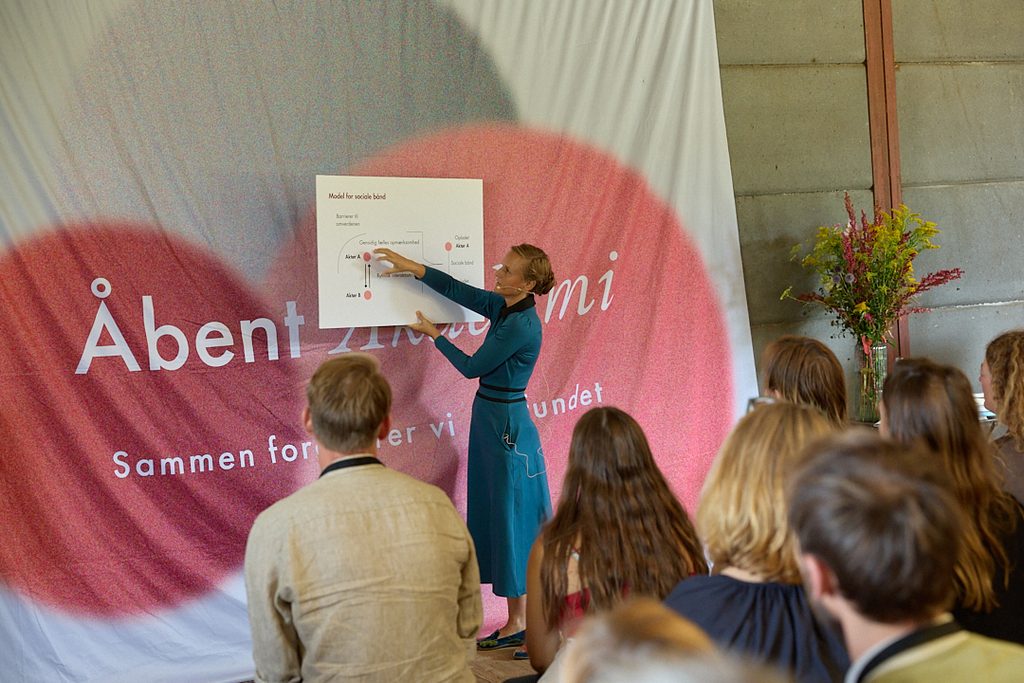
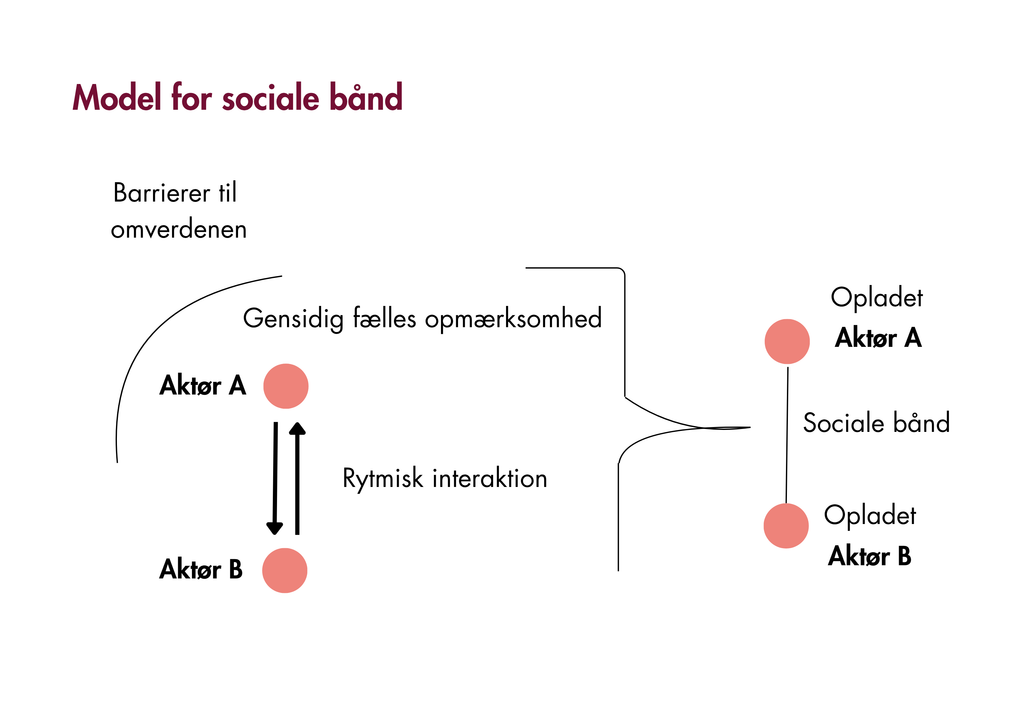
Isabel Bramsen highlights four factors from a model developed by the American sociologist Randall Collins.
- The negotiations must be clearly defined in relation to the outside world: Who is in, and who is out.
- The participants should maintain a shared focus on each other and on what they are doing. This means staying present in the room and avoiding looking at your phone or letting other distractions affect you.
- The interaction should ideally be rhythmic, with a steady back-and-forth, where it’s not just one person talking or where people interrupt each other.
- A shared mood strengthens the social bonds and energy between the parties
The Magic of a Break
Precisely because so much depends on physical interaction—facial expressions, rhythm, and a sense of connection with one another—in-person meetings offer far better opportunities to connect than digital ones, says Isabel Bramsen. This avoids the interruptions and delays that technology can cause, and it gives the parties the opportunity to make use of the informal space during breaks, where crucial progress can be made.
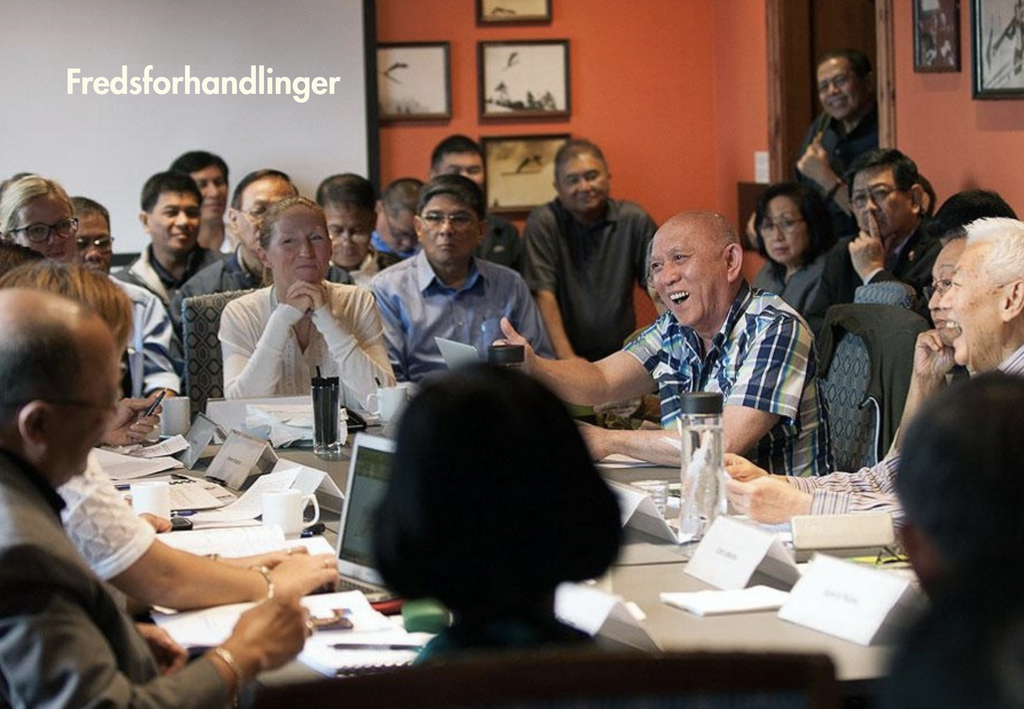
Isabel Bramsen mentions the peace negotiations between the Philippine government and representatives of the communist movement/guerrilla group (under President Rodrigo Duterte) in Rome in 2017. It was then that it struck her just how unfocused the negotiations were. It was difficult to define the boundaries of the room, where the participants were a lively mix of civil society actors, political advisors, military personnel, and religious representatives. Several people had their phones out, and one of the chief negotiators was even looking at a tourist map of Rome. In short, it was difficult to reach an agreement at the main negotiating table, but after a long break, an opening suddenly appeared. It turned out that the two lead negotiators had found their rhythm while smoking a cigarette outside.
Healthy Conflict
But is it even possible to believe in room for healthy conflict in an age when influential world leaders and the media thrive on creating polarization and fear? Isabel Bramsen points to Belgian philosopher Chantal Mouffe’s concept of the agonistic society, in which there must be room for intense disagreement and (nonviolent) conflict within reasonable limits. Mouffe opposes, among other things, Jürgen Habermas’s ideal that democracy must ensure rational consensus. She argues that this is simply not feasible in politics because political views are also rooted in emotions. “The goal of democratic politics [is] … to provide the framework through which conflicts can take the form of agonistic confrontation between opponents rather than manifesting as antagonistic struggles between enemies,” Mouffe writes in*The Democratic Paradox* (2009).
Isabel Bramsen agrees, which is why she is also deeply concerned about the polarization and “cancel culture” that social media, in particular, contributes to—where we silence or block voices we disagree with. “If we try to silence disagreement, unhealthy conflict environments arise where we talk behind each other’s backs. A healthy culture of conflict allows for conflict without necessarily reaching a solution. It is the encounter itself that is important, along with a pluralistic conversation that makes room for multiple voices. A society and a population that are divided are easier to steer in an authoritarian direction.”
Space to Learn More
As a researcher, she has participated in several debates in the media, and she believes there should be more room for reflection in this arena as well.
“For example, I’ve appeared on ‘Debatten’ with Clement Kjersgaard, where the lines are drawn very sharply. When the cameras were turned off, one of my ‘opponents’ came over, and we agreed that we probably weren’t so far apart after all. The media lacks a space for dialogue where one or more of the parties can learn something new. It’s important that we can also reflect on that kind of conversation.”
Isabel Bramsen

Head of Peace and Conflict Studies and Associate Professor at Lund University, Department of Political Science. In her research, Isabel Bramsen examines diplomacy, peace processes, dialogue, and nonviolent action in various conflict contexts in the Middle East, Europe, South America, and Asia. She has extensive experience teaching international conflict resolution and has written several articles and books on the subject, most recently the book *The Logic of Peace*. She is a member of Nordic Women Mediators and serves as chair of the Council for International Conflict Resolution.