Stella René and Nanna Vedel-Hertz from Generation Hope collect young people's dreams and hopes in letter form. Hope is the foundation for positive change, and it should not be reserved for young people, they believe. Now they are calling for an adult rebellion in the name of hope
“Dear future…
I am afraid
Will I get hurt?
You are gentle, bright, andbig
But you are also hard, dark, and small”
This is one of more than 1,500 love letters to the future that have been placed in Generation Hope's mailbox in recent years. Nanna Vedel-Hertz and Stella René founded the movement with the dream of using hope as a driving force for a better world. A kind of hope activism. They describe the letters they receive as equal parts dystopia and powerlessness, hope and drive.
"We are seeing a generation that is SO ready to take responsibility and act, and with big, fantastic dreams for what we want to create, from inclusion and peace to well-being," says Nanna. "But there is also a feeling of being far away from power and not having any influence on the things they fear, e.g. climate and war. Here, they feel that they are not being heard in any way."
Both believe that hope is the foundation for all positive social change.
"Hope is the belief that we can create change," says Stella. "Like activism, hope is an attempt to lead us in a direction where we can create the society we want. "
"We see hope as something active; as an ability," adds Nanna. "Some see it as pacifying or apathetic. We see it as a fundamental prerequisite for action.
Time for adult rebellion
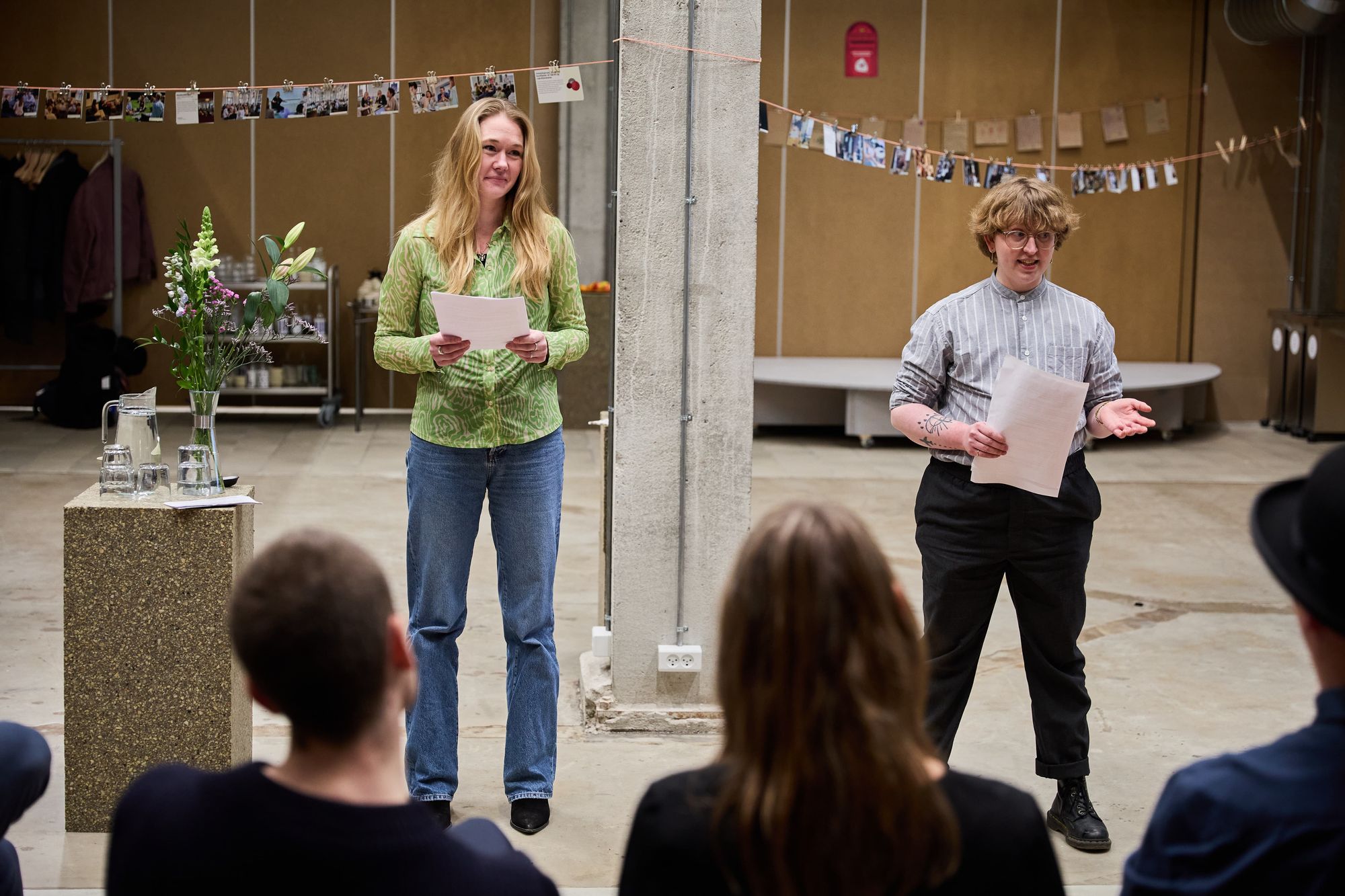
Generation Hope is part of the new future lab "Snart" at Thoravej 29, and in January, Stella and Nanna were invited to speak at the Academy's New Year's reception with a focus on activism. Here, they delivered a clear message to the leaders in the room: "The youth rebellion is underway, and we would love for you to join us. So our question to you is: is it finally time for an adult rebellion?"
And they believe there is a need to broaden the understanding and awareness of hope. Because hope and activism are perceived as irrational, naive, and even radical. But first and foremost as something that belongs to youth.
"We are faced with a paradoxical duality," says Stella. "People talk about how wonderful it is that young people are taking action—as if it is the responsibility of the younger generation to bring about change. And then, when we turn 30, we are told, 'Now you have to accept the world as it is.'"
Do we lose hope when we grow up?
"No, not at all," says Nanna. "But hope is a skill we must continue to practice, and even more so as we get older."
"There is a gradual change when we become adults," says Stella. “We mustn’t let that affect our participation. The nerves are there, but they mustn’t be prominent.
Train your hope
Generation Hope works based onCharles Snyder's "hope theory," which can be boiled down to three simple steps:
1. Set a goal. Big enough that you are passionate about it and small enough that you can achieve it.
2. Find the paths to get there. Preferably several different paths, in case challenges arise on one of them.
3. Believe that it can be done
Last year, Nanna published the book"The New Adults – Wherever You Go, Go with All Your Heart" on the subject. She believes that the theory has great potential when applied to a community.
"Hope Theory is based on individuals, but imagine if we also collectively practiced focusing on everything we want and hope for, instead of just focusing on everything we DON'T want – war, famine, etc.," she says. "Then we would highlight how much we actually have in common, and we would be able to set a common direction. And believe that we actually want the best for each other. History shows that we are capable of cooperating as a species – otherwise we would not have come this far."
So when the UN sets global goals, it's about more than just nice words?
Stella: "Yes, precisely because they are real goals that we set and agree on. And thus we can move towards them. If we all have the same dreams, then we have something to work towards."