The green transition is a fundamental transformation of our society that calls for collective action, social innovation and collaboration across sectors and disciplines. It touches every aspect of our lives - from our transportation habits, food production and labor market to our well-being and relationship with nature.
Historically, we have managed to bring about major social change through collective action – the cooperative movement, the housing movement, and key welfare institutions such as health insurance and public education. In the same way, the green transition will require broad, popular engagement.
The green transition is, by its very nature, a social transition, where our ability to act collectively will be crucial. There is a need to pool resources and knowledge and to hold each other accountable. For the collective imagination of a good society where we live within planetary boundaries. And to ensure that both the burdens and opportunities of the green transition are distributed fairly. Social justice and green transition must go hand in hand.
The green transition requires a high level of support and involvement to avoid polarization, inequality, and, ultimately, social unrest. And it requires the contribution and active involvement of citizens, businesses, civil society, and public organizations in finding the solutions.
Our approach
Social innovation is a democratizing approach. It creates and strengthens relationships, and the innovation process itself creates value and brings about change for those who participate.
In our work with the green transition, we have chosen from the outset to also look inward. Many of the Academy's members are rooted in the welfare sectors, and we are therefore working on how we ourselves can integrate the agenda, both in our own practice and in our respective organisations. We want to strengthen conversations about green transition in everything we do and invite experts from green organisations .
We see our learning community as an important basis for being able to act externally—and take responsibility for moving ourselves and society toward a sustainable future.
Our focus
Initially, we have identified three themes that we will work with in the coming period:
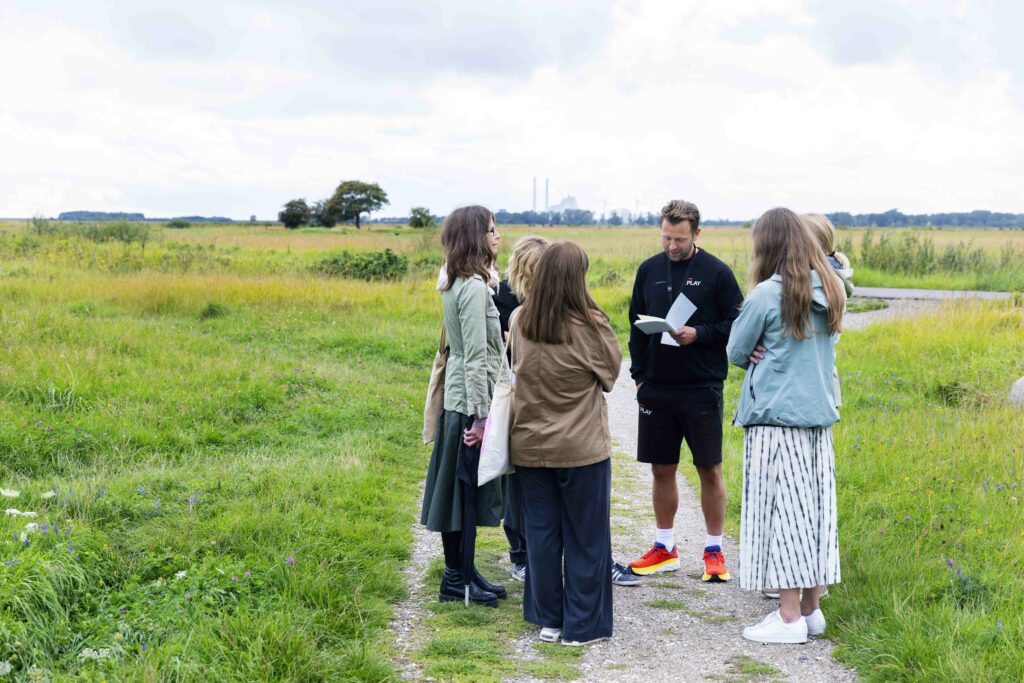
1) The Danish landscape:
Withthe Green Tripartite Agreement, large parts of our country as we know it will be converted into nature areas in order to restore biodiversity and conditions for life – in the countryside, but also to a large extent in inland waters, fjords, and rivers. This is a long-term change that will benefit future generations. This provides a very concrete reason to work long-term with a view to what kind of society we want to pass on to future generations.
At the same time, the vast majority of people have a relationship with and an opinion on how their local area should be developed, as well as concrete relationships with nature and places. Therefore, the Green Tripartite is an obvious opportunity to engage people in Denmark in local, democratic development processes that concern something concrete, understandable, and important. And which can help counteract polarization and paralysis and strengthen collective action locally.
But how do we turn the transition to more nature locally into a popular cause that mobilises, engages and involves across generations? There is a need to mobilise forces, knowledge and experience through strengthened citizen involvement, democratic innovation and knowledge about systemic change. This ecosystem of actors must be brought into play in the concrete, local processes.
The Academy will contribute by connecting actors, developing a common language and imagery, and highlighting good cases that can inspire and strengthen collective action locally.
2) Well-being, welfare and nature:
The welfare society exists and must be understood in the context of planetary boundaries. We have long debated whether we can afford both green transition and welfare. We do not believe that this division makes sense, nor is it productive in discussions about how we develop our welfare society and drive green transition.
We are concerned with how we can develop our welfare society in a way that takes into account the well-being of the planet. Broadly speaking, it is about establishing an understanding that the welfare of humans, nature, and other species cannot be separated. More specifically, it is about how we incorporate nature and our relationship with nature into social initiatives, healthcare, education, and pedagogy. Nature is, for example, one of the places where many people exercise, and there is a strong correlation between access to (and relationship with) nature and quality of life.
The Academy can contribute by connecting actors working with welfare development and green transition and building bridges between perspectives and initiatives. We do this, for example, in our work on the study "Mobilization for Welfare," where we examine what a welfare society model that takes planetary boundaries into account looks like in concrete terms.
3) Nature's voice in organisations and democracy:
We are facing an intertwined complex of planetary crises, all of which are the result of human impact on nature and the ecosystems we are part of.
We have been so accustomed to thinking of society, democracy, and organization as something that concerns humans alone. But humans are also nature—and our well-being and lives are deeply dependent on the well-being of other species. At the same time, we are seeing how the forces of nature—for example, in connection with floods and extreme weather—have a huge impact on human well-being.
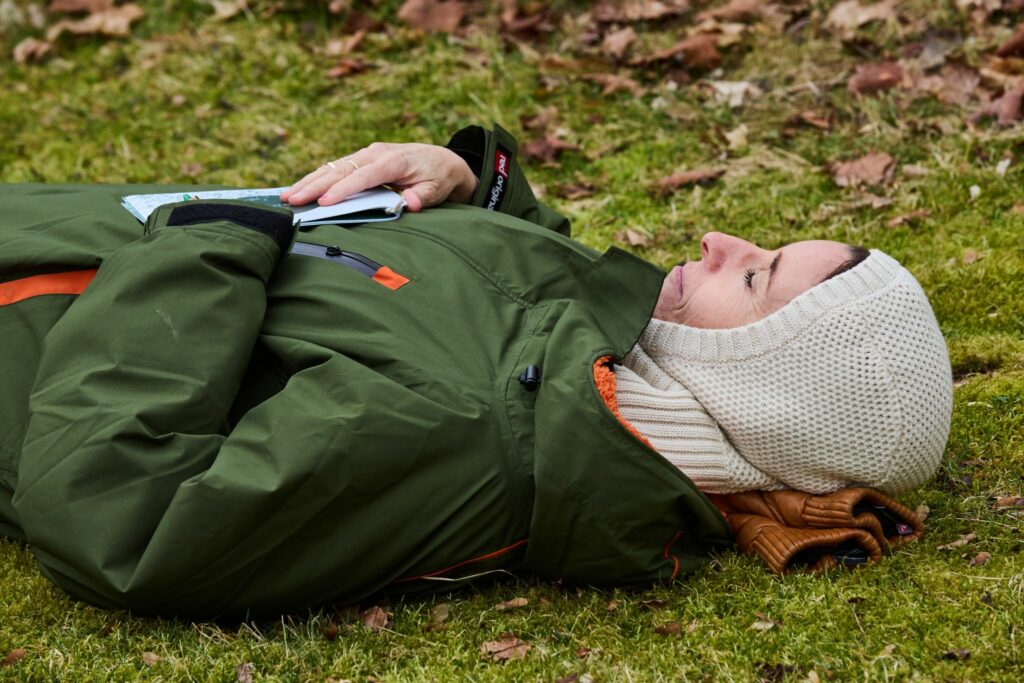
How do we take this interconnectedness seriously in our democracy and social model? How can we incorporate the voices and perspectives of other species into our decision-making processes in a way that allows them to influence the decisions we make?
The Academy can help to focus attention on, experiment with, and build capacity for organisations to organisations the perspectives of other species into their decision-making processes.
We can share experiences across the Academy's members, and together we can push for a greater understanding of how to work with "nature-inclusive governance." This is an agenda that is relevant both at the organizational level and in the overall conversation about the development of our democracy.
Invitation to collaborate
We believe that there is a great need to strengthen connections across disciplines and sectors in the green transition. If you would like to discuss further how we can strengthen collective action in the green transition, please contact Amanda Borg Gallmann at amanda@afsi.dk.