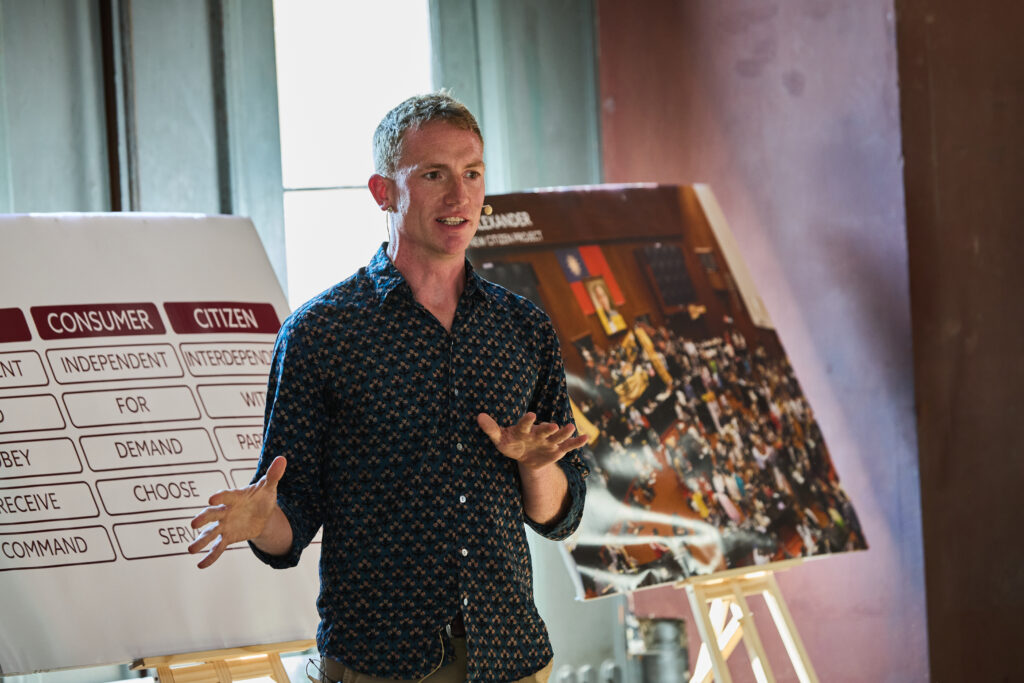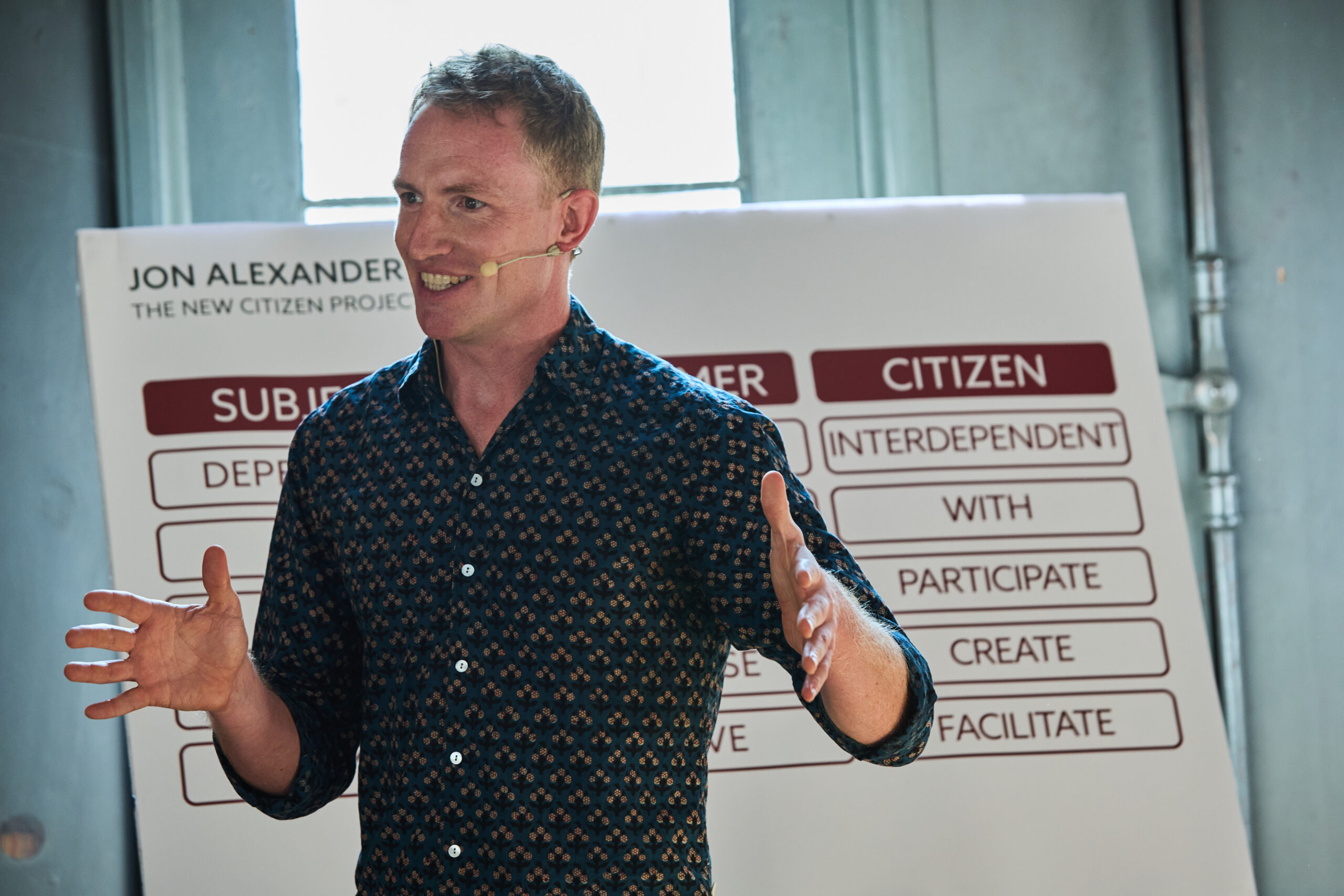
Author and founder of The New Citizen Project Jon Alexander talks about reclaiming our identity as citizens and the love of our own species
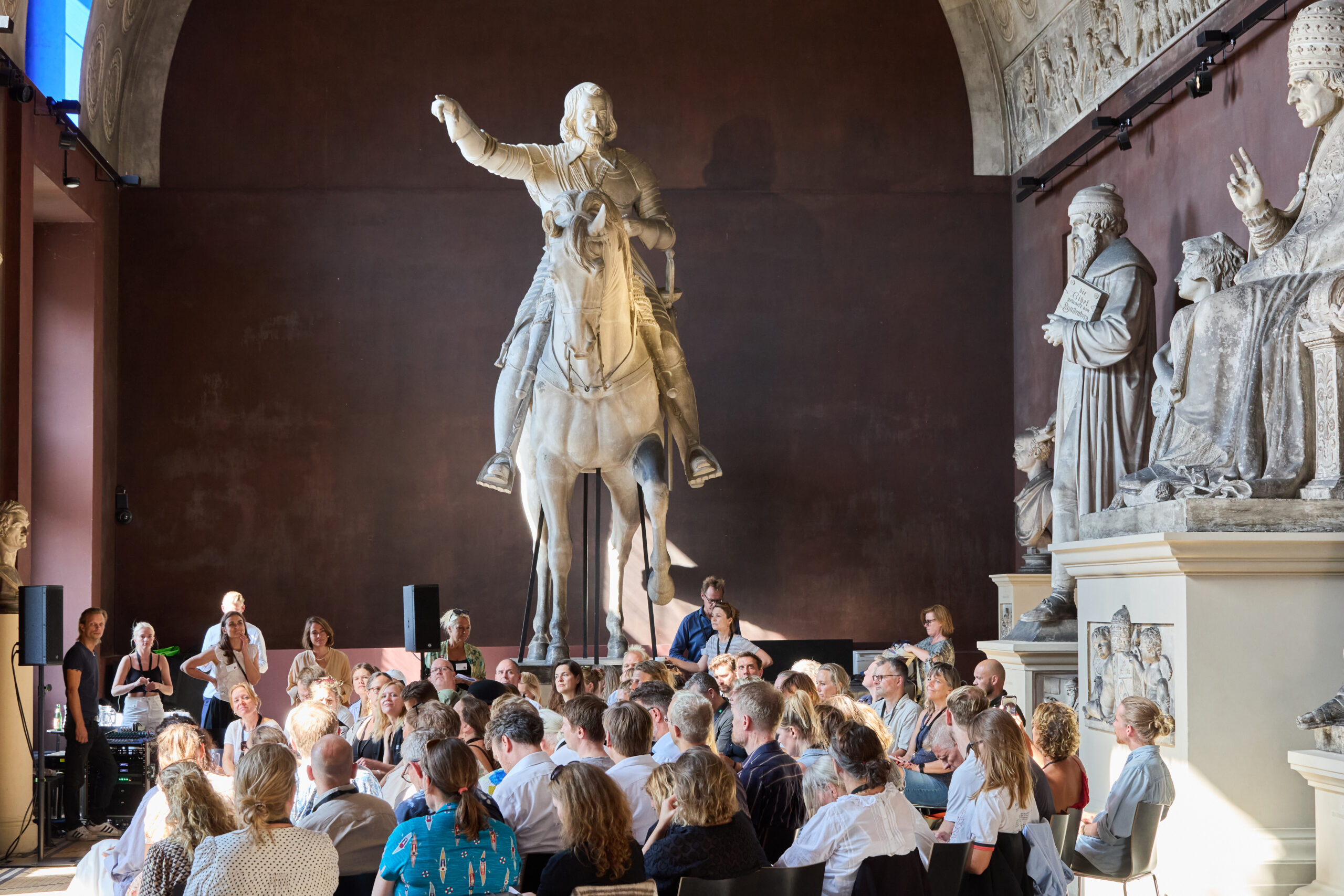
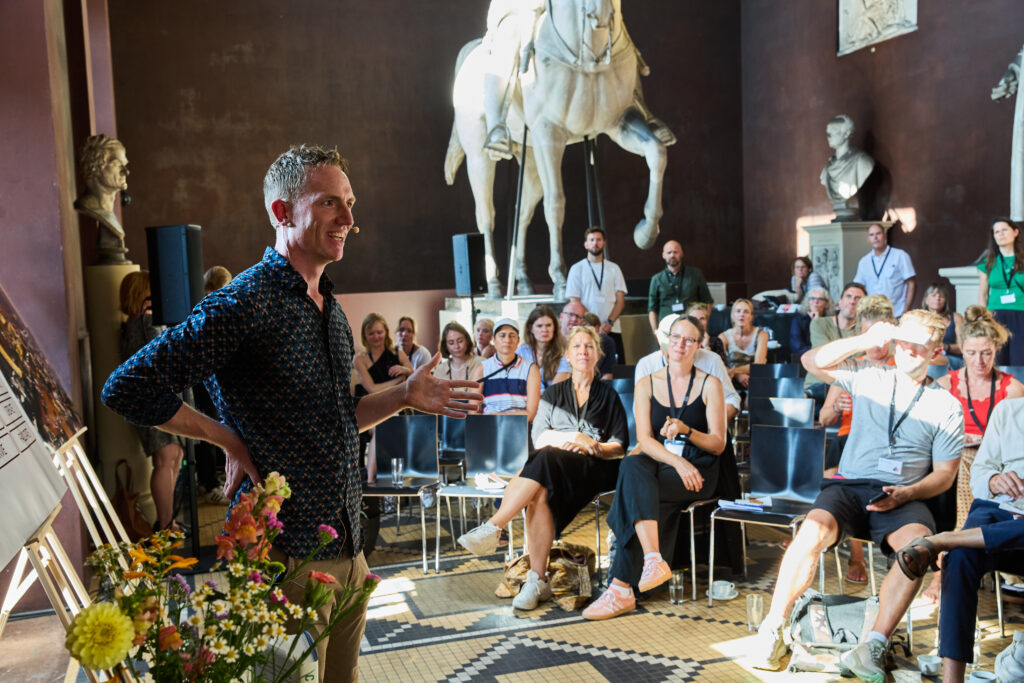
In September 2024, British democracy thinker and author Jon Alexander spoke at our annual Open Academy meeting. Among other things, he explained his basic idea that people must step out of the current narrative of passive consumers and become participating citizens. We then interviewed him about civic roles, communities and current crises.
How would you describe the concept of “the new citizen”?
It has been about 10 years since I used the term "the new citizen," and I am not sure I would use it today. I have increasingly come to see this work as a form of remembrance rather than innovation.
One of the most significant experiences for me in recent years has been spending time with indigenous cultures and peoples. They can quickly identify with my basic ideas because they feel it is their story. In many ways, it is, because it is fundamentally about interdependence and community. We need each other, the earth, and nature to be ourselves.
While researching for my book, I was excited to discover the etymology behind the word citizen: it literally means "together people." It is also important to distinguish between the role of citizen as status and the role of citizen as practice. The word "citizen" is problematic because it can be used to exclude non-citizens. We must let the word participate, engage, and imagine rather than a passport.
So rather than a new civic role, is it the rediscovery of the civic role?
Yes, it is a rediscovery or a reclaiming. I love the word "remember" because it is about resuming something we are already part of.
Stewards of the earth
What are some of the most important lessons you have learned from indigenous peoples?
One of the most significant experiences was spending time with Aboriginal philosopher and author Tyson Yunkaporta. He wrote the bookSand Talk: How Indigenous Thinking Can Save the World.
Tyson's main point is that we as humans have a role to play. Sometimes I fear that we no longer love ourselves as a species. Tyson talks about how, according to indigenous peoples, humanity has a responsibility to be the guardians or stewards of the Earth. It's not just about not doing harm, but about remembering how we are generative and constructive and playing the role we are meant to play.
You say we are losing love for ourselves as a species. Is rediscovering that love the first step toward positive change?
My friend Baratunde Thurston, who is an American comedian and author, used the term "latent love" when we were talking about the current political climate in the US. I believe that as humans, we naturally want to love each other and the world, but we are caught up in a narrative that prevents us from doing so.
I believe that love can start anywhere—in any community. Many people love where they live, they just don't talk about it that way. One of my favorite examples is from Grimsby in northeast England. It's a very run-down town, and here a man stood up at a city council meeting and said, "The municipality is not going to fix this for us. We have to do it ourselves." Today, they have raised funds to convert ten houses into public housing, established an art festival and a local newspaper. It all started with a shared love for the place.
Out with the consumer story
Why is this transition to remembering the role of the citizen particularly important now?
It is crucial because our current systems and institutions are falling apart. Those in power only see the consumer narrative and are trying to maintain it. But this narrative cannot be sustained, and it is pushing people toward authoritarianism and fascism. We need a new community in which everyone can participate.
Do you see the ongoing riots in England as an example of this?
Absolutely. But it is important to note that people came out and rebuilt their cities. And when new riots were announced, people turned up—sometimes in their thousands—to protect their cities. Unfortunately, this has not been acknowledged by the prime minister. One could have given a speech about the energy in those communities and built on that. But they don't see it.
Small, deep changes
In your book, you talk about signs of the shift from passive consumer to participating citizen. What do you see as the biggest barriers to this transition?
Outside the existing systems, we see many small, profound changes, but the forces of change may not see each other. We need to connect these movements and help them see that they are part of something bigger. Within the systems, it is about opening up and making room for citizen participation.Taiwan is a good example,where activists created solutions that the government eventually recognized and integrated.
Where do we go from here?
I believe that the solution must come from outside the government, as we saw in Taiwan. We need participatory democratic processes such as citizens' assemblies that can create concrete plans for climate action and other major challenges. It's about building an alternative to the existing legitimacy, because the current systems simply cannot deliver the solutions we need.