The Danish Parliament must support the development of a national strategy for social innovation and a strong financing structure to which philanthropic funds and investment actors can contribute, write Sara Gry Striegler and Anders Folmer Buhelt.
By Anders Folmer Buhelt and Sara Gry Striegler.
This article was first published in Altinget November 13, 2023
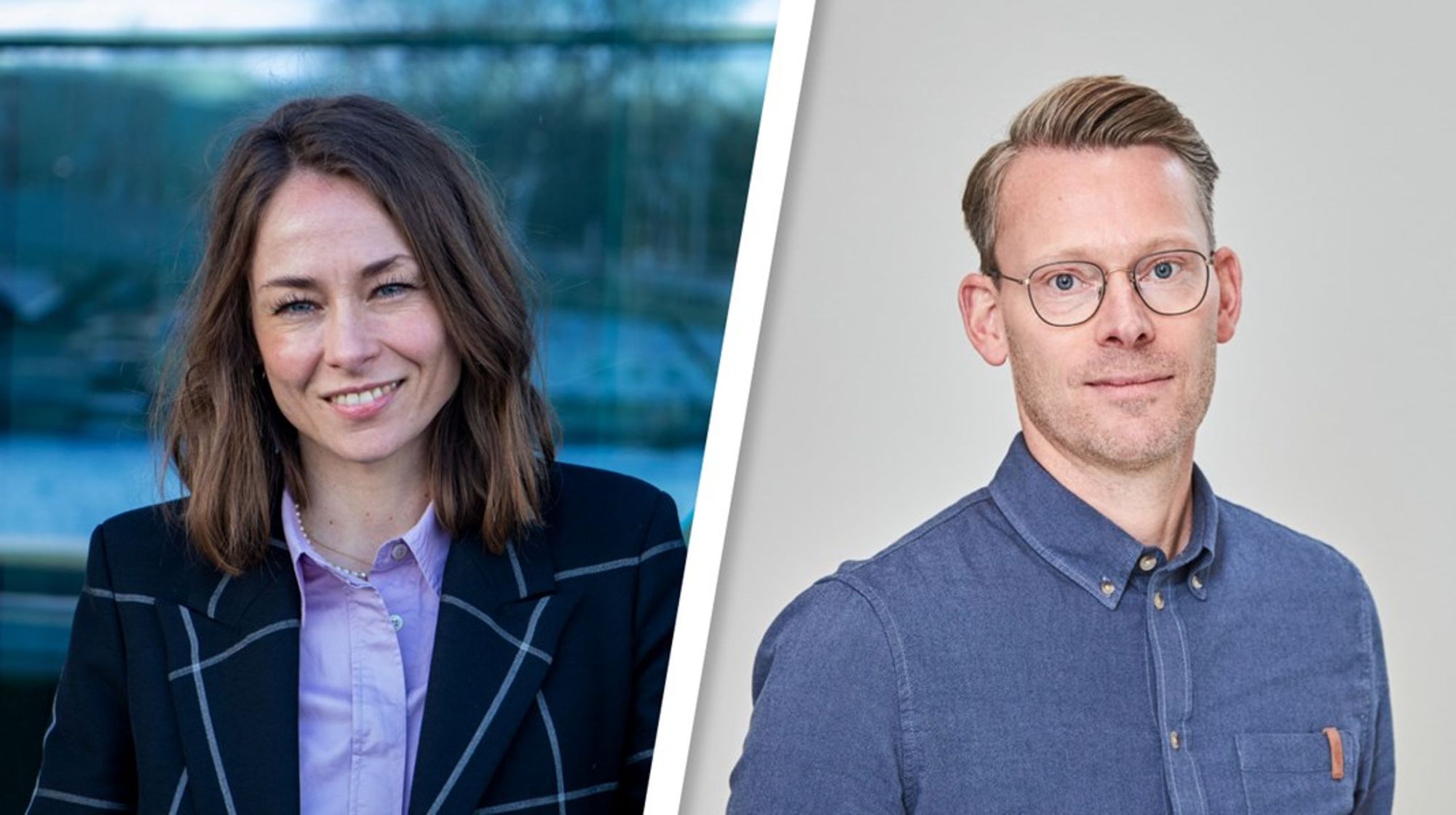
Sara Gry Striegler: Director of Social Change, Danish Design Center, External Lecturer, DTU, Chair, Danish Social Innovation Academy Anders Folmer Buhelt, Academy Director, Danish Social Innovation Academy
Society's major problems dominate the media, political debates, and dinner table conversations. Whether we call them wild problems or not, it is becoming clear that certain social problems call for completely different approaches, collaborations, and methods than those we are used to.
Our traditional Danish pragmatism, where we collaborate across interests, seems to have been forgotten in recent decades. Collaboration does not come naturally, but requires prioritization and investment.
Although we live in a fantastic society, there are problems that we have not managed to solve despite decades of trying. It is as if we have forgotten to renew ourselves, forgotten to keep up with the times. Forgotten the fundamental conversations about what kind of society we want.
We are not doing well enough when thousands of young people from each age group end up outside the communities. When there is a shortage of labor, while there are still people outside the working communities. When there are people who want to be something to someone and people who want someone to be something to them—but we are unable to bring the two together. And when more and more people, especially young people, experience unhappiness and loneliness.
There is now a consensus on the need for fundamental change if we are to preserve our welfare society and not get stuck in what Sigge Winther calls "wild problems" – the social problems that are complex, intertwined, and difficult to grasp.
He has given us a language for these difficult, troublesome, and sometimes intractable problems. At Danish Social Innovation Academy , we Danish Social Innovation Academy that this has helped to foster a readiness and a desire to explore new avenues and find new perspectives that can help us to push forward and influence the major social problems.
There is a lack of coherence
Fortunately, there are many people working every day to renew and strengthen our society and common ground. Lots of dedicated people pushing the hard issues from every corner with their knowledge, experience and dreams.
“It requires prioritization and bold investments across society to create the infrastructure needed to strengthen our ability and capacity for social innovation.”
In 2021, Danish Social Innovation Academy a survey of social entrepreneurs—people who take action to bring about social change when they see a problem or an opportunity. This could be by creating new approaches to employment, initiating a forest school, efforts that promote green transition, or something else entirely.
The report shows that social entrepreneurs feel alone and lack sparring and experience sharing, regardless of whether they work in the public system or outside it. And that there are gaps in the financial infrastructure, which stand in the way of many good initiatives. Not that there is necessarily a lack of money, but that there is a lack of basic understanding of the value of social entrepreneurship and social innovation.
Therefore, there is a need to invest in creating an ecosystem for social innovation where actors from all parts of society can meet and collaborate on developing proposals for the future society we want. And which can be a focal point for building capacity and ability for social innovation in all parts of society.
Should Denmark lead or lag behind?
In the EU, OECD, and World Economic Forum, social innovation is high on the agenda for solving societal problems and turning future threats into new opportunities. The EU emphasizes in several policies that the green transition is social in nature because it requires joint efforts and a focus on maintaining social cohesion during the transition.
This applies when we need to transform our mobility, our clothing consumption, and our eating habits into sustainable models, or when we need to change our culture of replacing broken items to a culture of repair. This requires something from all of us, both a change in mindset and behavior.
The countries around us are also working systematically with social innovation. If we compare the share of EU funds that different countries spend on social innovation, the figure for Finland is 84 times higher than for Denmark. And for Sweden, 100 times more. Sweden has had a national strategy for social innovation for the past ten years, and Germany has just adopted one. And in Portugal, over the past ten years, with an investment of €150 million, work has been done to build an ecosystem for social innovation and social investment. We could go on.
But Denmark is still in a good position to take the lead and work systematically to address social problems in ways that create know-how that can inspire the rest of the world. This requires us to be far more active and strategic than we are today.
It doesn't happen by itself
Social innovation has never really taken root in Denmark, but it is a major field of practice and research internationally. It is an approach to social change that takes its starting point in the actors and, over time, leads to a transformation of existing structures, unleashes hidden resources, and empowers new groups. The processes are inclusive and value-creating for those involved, and lead to changes in access to power and resources through new relationships.
This does not happen by itself, but requires infrastructure that supports knowledge, exchange of experience, and investment opportunities, and brings together people from all corners of society. It requires investments, as we know from other Danish areas of strength, such as medical technology, green technology, fintech, and robotics.
Denmark stands on a solid foundation of cooperation between sectors, knowledge of social problems, engagement in everyday democracy, and trust. Why not use this strong starting point to work together for systematic social innovation – for example, based on an ambitious national strategy?
Professional organisations, employers, educational institutions, civil society, foundations, and investors can thus contribute even more to the development of society that will take us strongly into the future.
“The Danish Parliament can support the development of a national strategy and a strong financing structure to which both philanthropic foundations and investment players can contribute.”
Both the Danish Parliament and foundations must be involved
There are many people working on this. And new players are constantly joining the fray – fortunately! One example isSigge Winther's new think tank INVI, which aims to contribute new ways of doing politics. And Thoravej 29, a community initiated by the Bikuben Foundation, brings together ambitious players across the arts, social innovation, and other disciplines to collaborate on the necessary transformations of society.
We are excited that such ambitious initiatives are emerging and being invested in, and we hope that more will follow. Because we need even more people who are willing to collaborate, share ideas, dreams, experiences, and resources so that we can mobilize the collective energy needed to tackle the major challenges we face as a society.
Creating the infrastructure needed to strengthen our ability and capacity for social innovation requires prioritization and bold investments across society. The Danish Parliament can support the development of a national strategy and a strong financing structure to which the major financial institutions – both philanthropic foundations and investment players – can contribute, as we have seen in other areas.
At Danish Social Innovation Academy , we Danish Social Innovation Academy to create the conditions for Denmark to once again become world champions in solving society's problems before they become so wild that we dare not approach them. We hope that the Danish Parliament and many others will join us.